Trusted by sailors since 1978 – available in print & eBook
Svalbard Stopping
The information below is in addition to that presented in chapter Norway, 8. Stopping; some of which also applies to Svalbard.
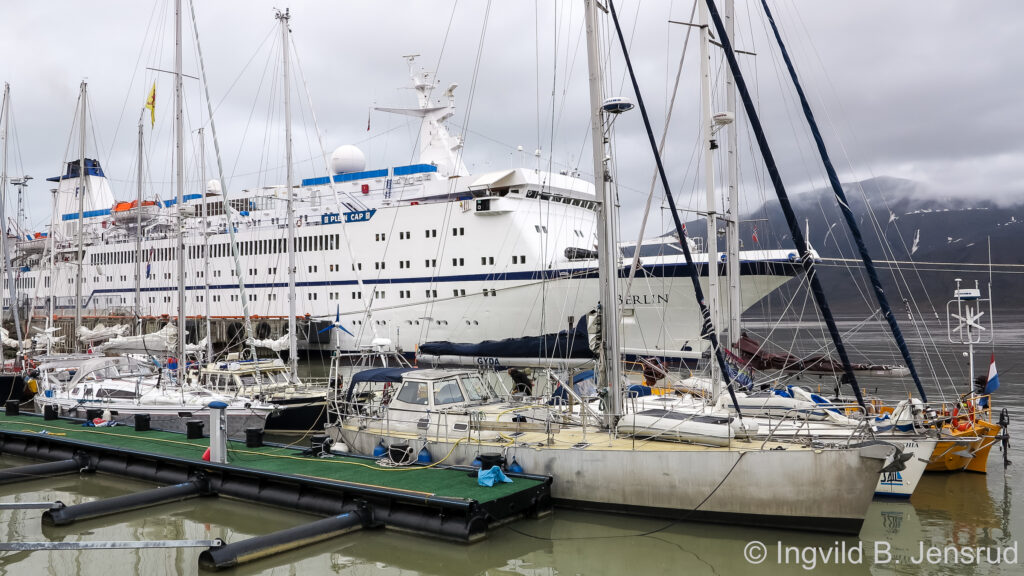
Docks are only available in Longyearbyen, Barentsburg, Pyramiden and Ny-Ålesund. However, none of these provide reliable shelter from strong winds, waves or ice, and in some conditions it may be safer to remain in open water or use an anchorage instead.
Anchoring
Ice
Wind speed, wind direction, and drifting glacier ice are often very local. Moving to an anchorage just a few miles away can result in completely different conditions. With continuous daylight, relocating is easier than in a dark night, so an anchorage that might feel unsafe at night can be acceptable. However, wind and ice conditions can change quickly, which is important to remember if you leave the boat unattended while ashore. Anchoring in the shallowest safe water helps reduce the size of ice that can drift into the boat.
Bottom Conditions
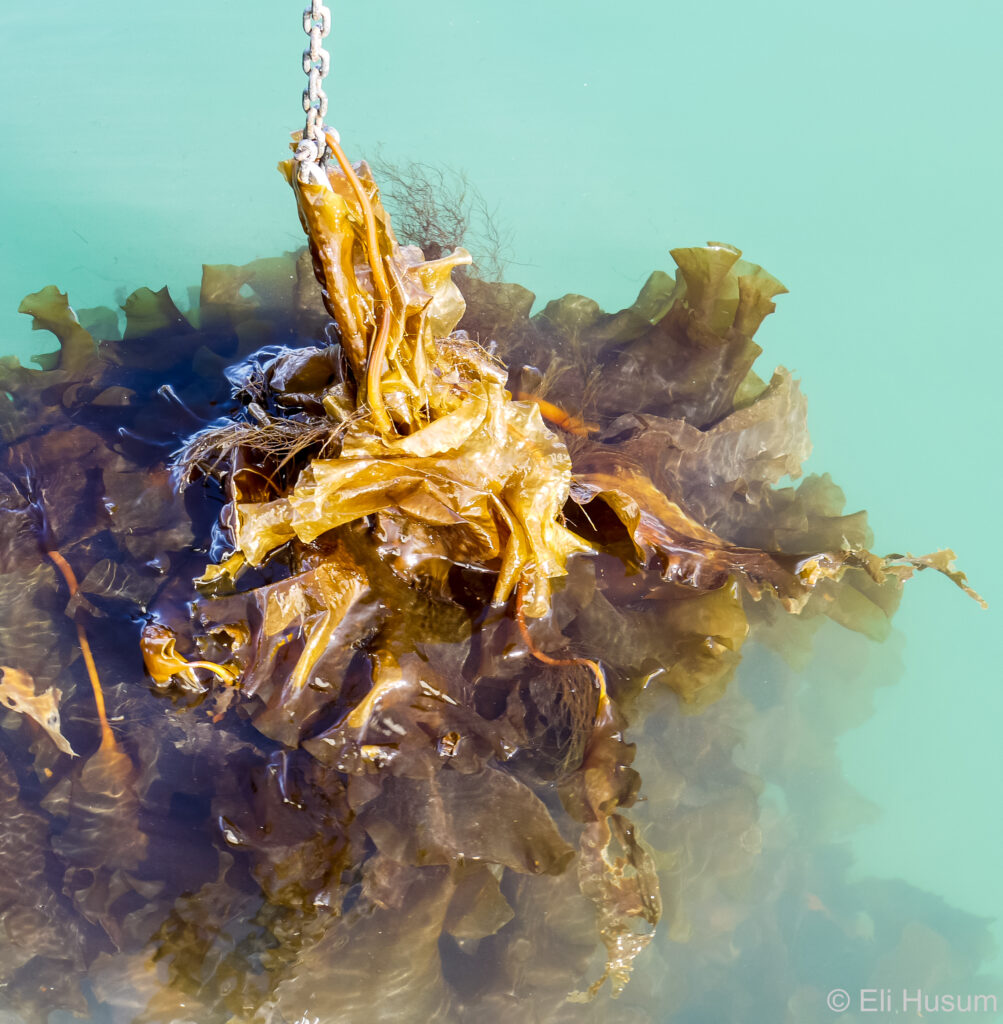
We had no trouble setting our anchor in most places, and holding is generally good. An exception is Heleysundet in Hinlopenstretet, where one contributor found poor holding very thin mud. In this type of bottom, no anchor is likely to hold properly and it may slowly drag when the engine is under load. Other contributors have however found good holding in the same anchorage.
Many anchorages are fouled with dense kelp. When anchoring, it is important that the anchor bites into the seabed and does not simply catch in the kelp. A long, sharp serrated bread knife, together with a boathook, can be useful for cutting kelp away from the anchor when retrieving it.
It is strongly recommended to have an alternative anchorage planned in case your first choice proves unsuitable.
Shelter
Good shelter is usually found behind low moraine spits, which reduce waves without creating strong wind gusts. Anchorages in the lee of high, steep mountains are often exposed to heavy and sometimes dangerous gusting.
Bjørnøya offers usable anchorages on both the E and W sides of the island. However, all are exposed from at least one direction and can quickly become uncomfortable or even unsafe in an onshore wind.
Make sure you have up to date information about where landing is permitted. Commercial vessels are only allowed to land passengers at 43 designated areas, pleasure craft defined as “individual travellers” have a much wider choice. Landing restrictions in Virgohamna and Habenichtbukta were lifted 2025.