Trusted by sailors since 1978 – available in print & eBook
Norway Stopping
Anchoring
If you are like us, you enjoy nothing better than a beautiful, wild and secluded anchorage, and in Norway, North Norway in particular, there is an abundance of these; however, there are also challenges to anchoring in Norway. Below are some of the issues you may face.
Sea Bottom Conditions
There are various types of sea bottom in Norway that can make anchoring problematic, including thick kelp, stiff clay with weed, and hard sand. Having the right type of anchor, and knowing how to set it properly, will make anchoring enjoyable instead of a trial.
Depth
Norwegian anchorages tend to be deep, so carrying enough rode to anchor in 20 – 25 m of water (100 m or more of rode) will significantly increase the number of anchorages available to you. If that is not possible on your boat, then take as much as you can, we recommend at least 60 m.
Limited And Sloping Shelf of Suitable Depth
Often found in deep fjords, where depths shallow enough to anchor in are hard to find, a possible approach may be to drop one anchor as far inshore as possible, the extremely shallow depth compensating for the unfavourable downsloping angle of the bottom, and then to drop a second anchor in deep water offshore, the resulting short scope being compensated for by the favourable upsloping angle of the bottom.
Small Anchorages
Mooring Bolts
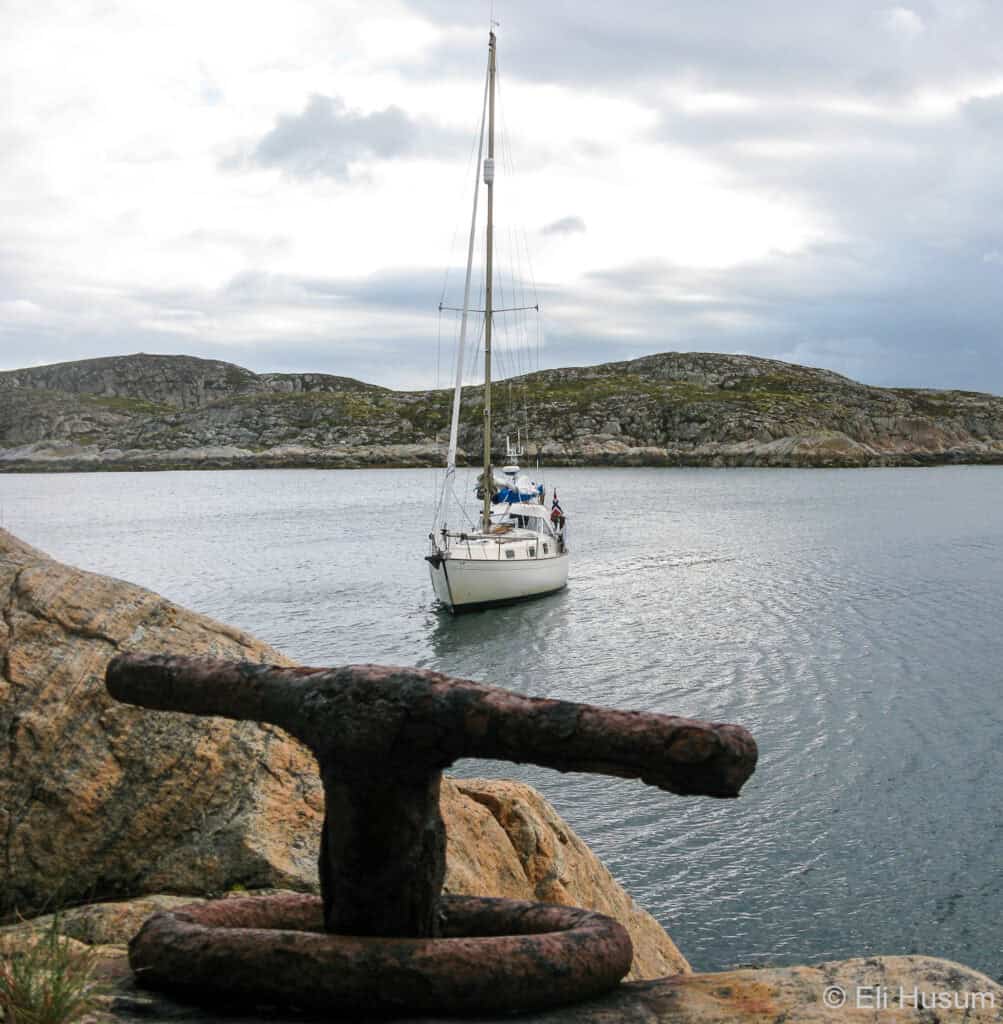
Many small anchorages have fortøyningsbolter (mooring bolts) — T-shaped metal pickets or rings set into the rock — often marked by target-like rings painted on the surface of the rock around them to increase their visibility.
You will also see these in narrow channels; not, of course, for mooring, but as an aid to sailing vessels, prior to engines, to warp through.
Some locals, particularly those in smaller boats, carry their own mooring bolts, which they hammer into cracks in the rock.
Shorelines
It is customary in Norway to use an anchor off the stern or bow and a line to a mooring bolt, with the line led into the direction the wind is expected to come from. This can enable an anchorage to be used in heavy weather even when the holding is only moderate and also when the swinging room is limited (Scandinavian-style or Nordic mooring).
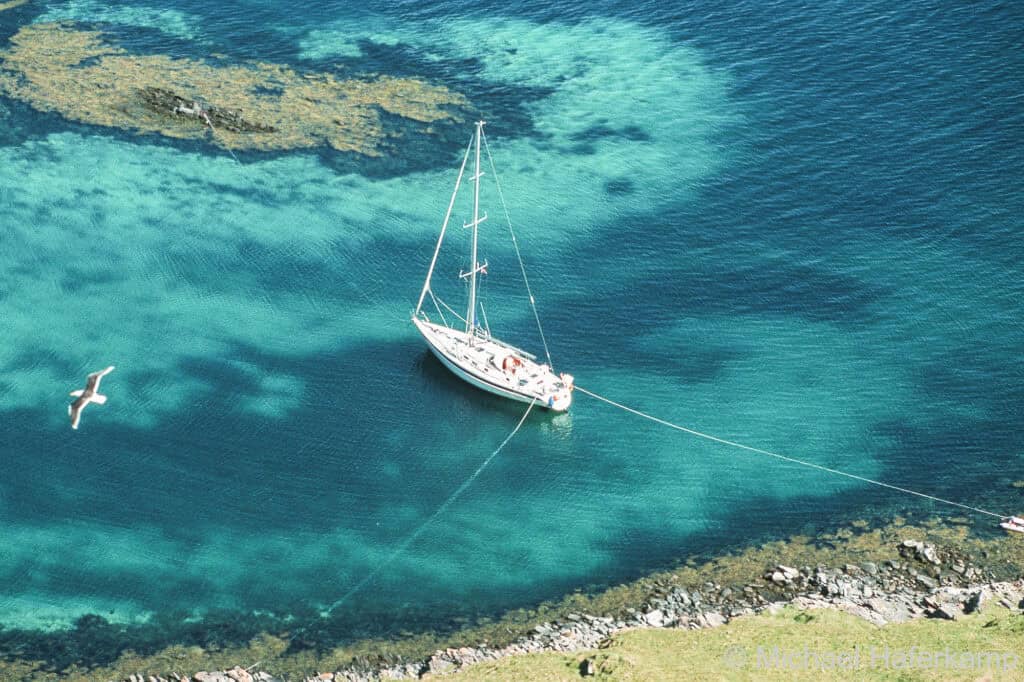
One drawback of this method is that it takes considerable time and effort to rig and unrig shorelines. Also, side loading by wind on the beam produces very high stress on the anchor, which could potentially drag and, if the wind comes up from an unexpected direction or harder than anticipated, it could be very difficult to retrieve the shorelines and effect a change.
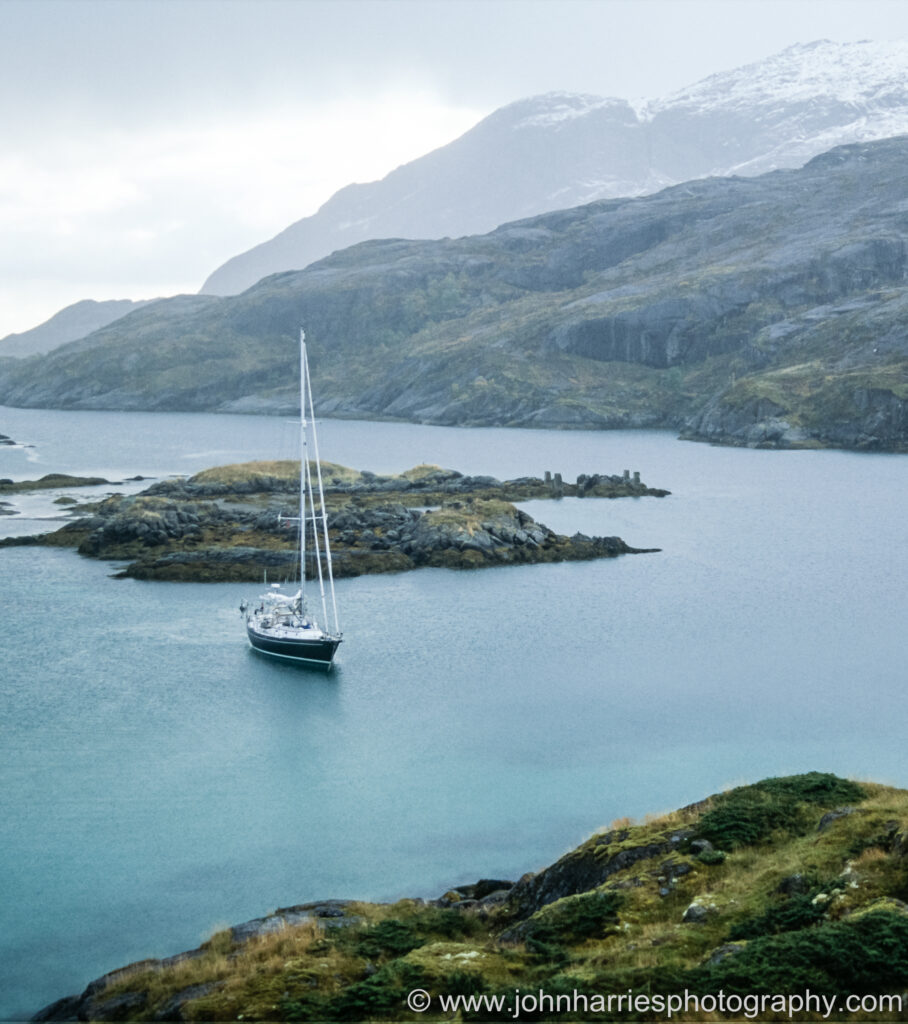
As an alternative to shorelines one can also set two anchors 90° apart off the bow, their positions depending on the expected wind direction and bottom contour. This substantially reduces the swing room required and might be easier than rigging shorelines.
Underwater Cables And Pipelines
Chart symbols: a continuous wavy red line denotes underwater cables and a line of joined red dashes and spots, looking rather like a string of tadpoles, denotes underwater pipelines.
Challenges:
- These structures are not always shown on the chart, so keep a lookout on shore for signs that read Kabel or Avløp or Ankring Forbudt (Anchoring Forbidden); however, coves marked as anchorages on official charts with no submarine structures shown, that have been used by generations of mariners, are now marked with “no anchoring” signs, probably put up by residents of the many summer cabins (primarily in popular holiday destinations on the southeast coast);
- The location shown on the chart does not always accord with reality so be very careful if trying to anchor near charted cables or pipes. Rig a trip line if you are at all in doubt.
Shelter
Anchoring in the lee of high steep ground will often be a poor choice due to fallvinder — extremely gusty winds peaking far in excess of the average; known elsewhere as katabatic gusts or williwaws.
Tying Up
Visitor Berths (gjestebrygger)
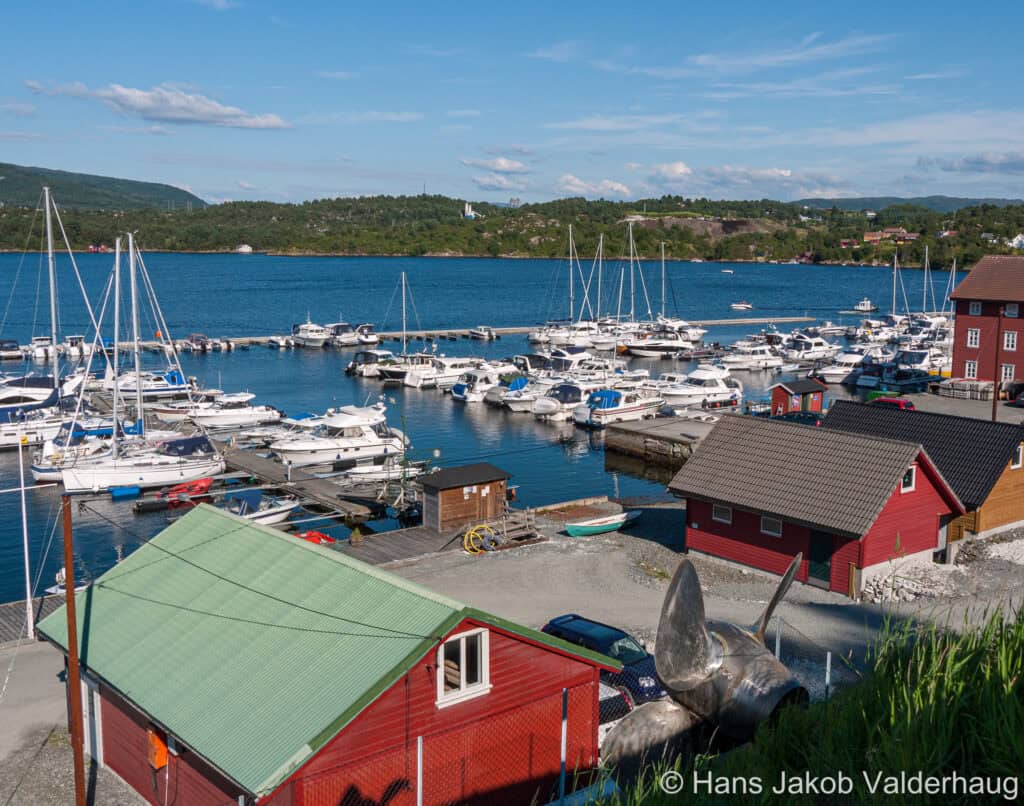
In larger towns and cities, and increasingly in smaller places, visitor berths are provided, frequently with some combination of electricity, water, showers and washing / drying machines. Private boat clubs in Norway are called båtlag or båtforening. These usually include both motorboats and sailboats. A seilforening is mainly a sailing club. It focuses on sailboats, but it may also have a few motorboats. Many of these clubs have spaces for visiting boats. Some also let visitors use a member’s berth if it is empty.
More and more harbours have installed floating pontoon systems (flytebrygger) with attached finger piers separating the berths. These are easy to tie to and convenient; however, since most Norwegians have smaller boats, anyone with a boat larger than about 12 m in length may find manoeuvring and berthing difficult in these small boat harbours (småbåthavner).
Private Docks
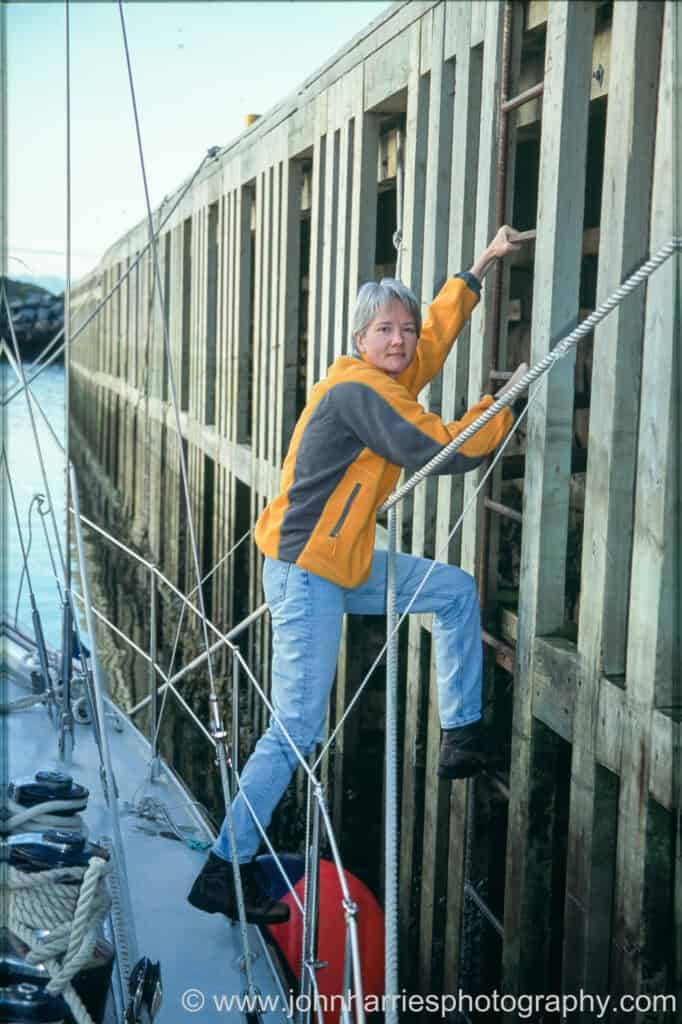
In places where there is no gjestebrygge or it is full, do not tie up to a private dock or pontoon unless invited to do so by the owner, and never plug into someone’s private electricity outlet without having agreed on compensation for this. Visiting sailors have been known to abuse the use of private docks, which means that locals may be less than pleased to see the next visiting boat that pulls into the harbour. Where there are no visitor berths available, you should seek out the nearest anchorage and visit the village by dinghy.
Docks, Quays And Wharfs (kaier)
In places where there is no flytebrygge, where the pontoon is full of visiting boats, or where the pontoon is too small, you may have to rely on quays.
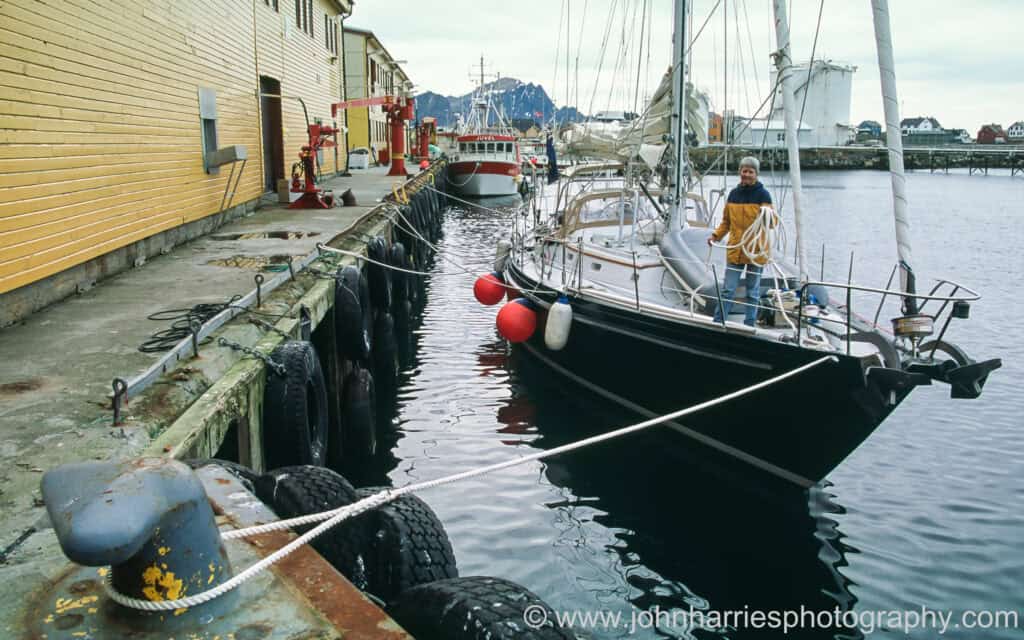
Several issues to keep in mind:
- Leave enough slack in your mooring lines to account for the tidal range.
- Some commercial docks may not extend low enough at low tide, and many have old tyres secured along them to act as fenders, meaning the boat could drift under the tyres or the dock itself and then get caught on the rising tide. Several options to avoid such a scenario:
- keep the boat pulled off the dock using an anchor off the beam, if you can do so without hampering harbour activities;
- buy two large balloon fenders that slide over the tyres;
- go elsewhere.
Offshore Lines (lazy lines)
In South Norway you may encounter fixed offshore lines consisting of one or two ropes per berth attached to a mooring offshore, run from there to the pontoon or wharf, and then allowed to sink to the bottom when not in use. These will be familiar to European / Mediterranean sailors but may be a new experience for non-Europeans.
Fees
Costs for berthing generally run between 200 and 500 kr per 24 hours and in some places there will be an extra charge for electricity.
Methods of payment:
- Cash: In some harbours you can pay at a shop or there will be a posted telephone number and you can enquire about paying in cash. Note that some harbours will charge you extra if you insist on paying with cash.
- Bank transfer: A few harbours post their international bank details (IBAN number) allowing for a bank transfer.
- Mobile pay: Many small harbours will only accept payment by VIPPS, which is a national mobile pay system widely used in Norway, currently limited to residents of the Nordic countries. The only option then is to liaise with a local who will pay your fees with their VIPPS account, making sure the owner gives your boat’s name in the payment details. Then you can pay the account holder with cash. It is expected that collaboration with the European Payment Alliance will make MobilePay accessible to other nationalities in the future.
- Parking-meter style: some cruisers have experienced problems with foreign cards in these machines
- Mobile apps: e.g. GoMarina or Mooringo, get more and more common and seem to accept most debit cards.
- Apple Pay: Though not used by many harbours yet, it is widely accepted in restaurants and shops.
Webcams in Norway – get a look at harbours throughout Norway
Moorings
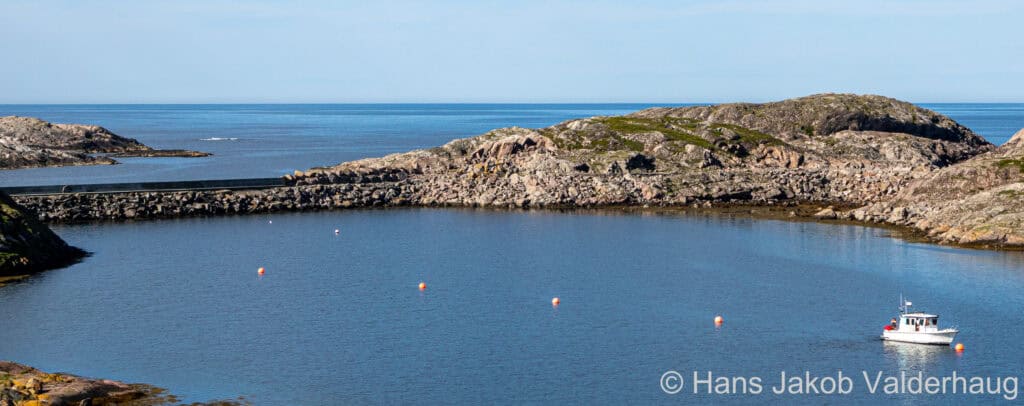
Most moorings in Norway are private. Some local boating clubs have put down moorings for use by their members. The usual warnings apply when picking up a mooring that you are unfamiliar with.
Most of the moorings available for general use will be put down by one of the following parties:
- Kystverket (The Norwegian Coastal Administration) has some moorings intended for fisherfolk waiting out poor weather. These will usually be located in areas less frequented by visiting cruisers. While fishing boats have priority, the moorings are often vacant during the summer.
- Kongelig Norsk Båtforbund (KNBF) (The Royal Norwegian Boating Union), for some years put down moorings from Stavanger to the Russian border. The project ran out of funding in 2022 and many of the moorings have been removed. In some locations local boatclubs have taken on responsibility for maintenance of the moorings, but in other locations the moorings have been left in place with no maintenance routine. We recommend not to trust these moorings.
- Oslofjorden Friluftsråd has placed moorings in approximately 50 locations in Oslofjorden. The moorings are intended for boats up to 8 tonnes. Boats flying the Oslofjorden Friluftsråd burgee have priority.