Trusted by sailors since 1978 – available in print & eBook
Svalbard Food, Alcohol and Water
Food
Svalbardbutikken, the main grocery store in Longyearbyen, offers a good range of supplies. Prices for fresh items such as milk and vegetables are higher than on the mainland, while canned and dried foods, as well as long-life milk, may be cheaper. Fresh produce is flown in from the mainland, most other supplies come with the supply ship “Norbjørn” from Tromsø.
Alcohol
Tax-free alcohol is sold at Nordpolet in Longyearbyen, and at the small shop in Ny-Ålesund. Nordpolet is part of Svalbardbutikken. Visitors who stay in Svalbard for more than 30 days can buy alcohol. They must apply for an alcohol license with the Governor in advance. An airline boarding pass is accepted as a valid licence. Visitors are granted the same beer and spirits quota as residents, 2 bottles of spirits or 4 bottles of strong wine (port, sherry), 0.5 L of strong wine, 24 cans or bottles of beer. Ordinary wine is available for reasonable consumption without a formal quota.
Normal mainland import limits for alcohol and tobacco apply when returning to Norway.
Water
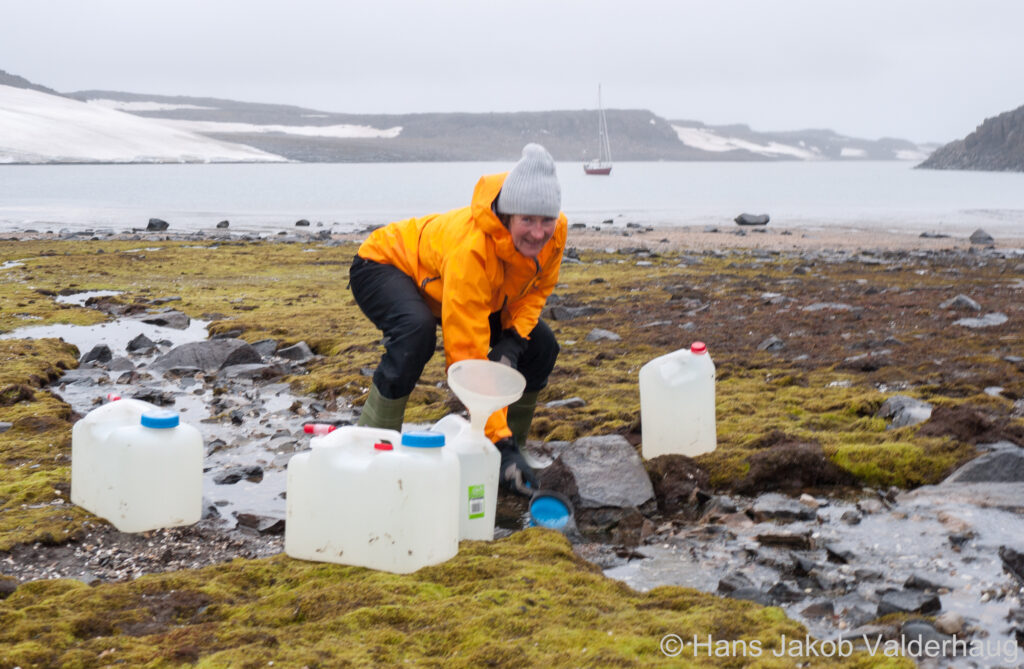
Fresh water can be bunkered at the docks in both Longyearbyen and Ny-Ålesund. We do not recommend filling tanks from streams or drinking untreated stream water because reindeer and Arctic fox are common and there is a risk of giardia and fox tapeworm. Hikers, and crew on yachts circumnavigating the archipelago, do however regularly fill their tanks from streams. Water flowing directly from glaciers is generally free of giardia and tapeworm but is often full of glacial flour, the fine rock particles that give glacial streams their milky colour.
In summer and autumn 2025, the Longyearbyen local council (Lokalstyre) reported that manganese concentrations in parts of the town’s drinking water supply were significantly above the recommended limits used on the Norwegian mainland. Health authorities indicated there was no immediate acute health threat, but that long-term exposure to high manganese levels over years could pose risks. The results of the monthly water quality tests are published on the council’s website.