Trusted by sailors since 1978 – available in print & eBook
Appendix The Norwegian Propane System
Please note that we are not gas system experts. The information below is based on practical experience and informed assumptions. You are responsible for checking that any changes to your boat’s gas system are safe and properly installed.
Before making any of the conversions described, confirm that your onboard appliances are compatible with Norwegian gas regulators, which supply gas at 30 mbar. Regulators of 28 mbar and 37 mbar are no longer permitted in Norway. Propane is available in re-fillable cylinders. Butane is only available is small single-use canisters for camping appliances.
Propane is highly explosive. It is heavier than air and will collect in the bilge if it leaks. After any modification, your system must be carefully checked for leaks.
If you change to a Norwegian system, there are three regulator types, each fitting a different cylinder type.
H-Type Cylinder
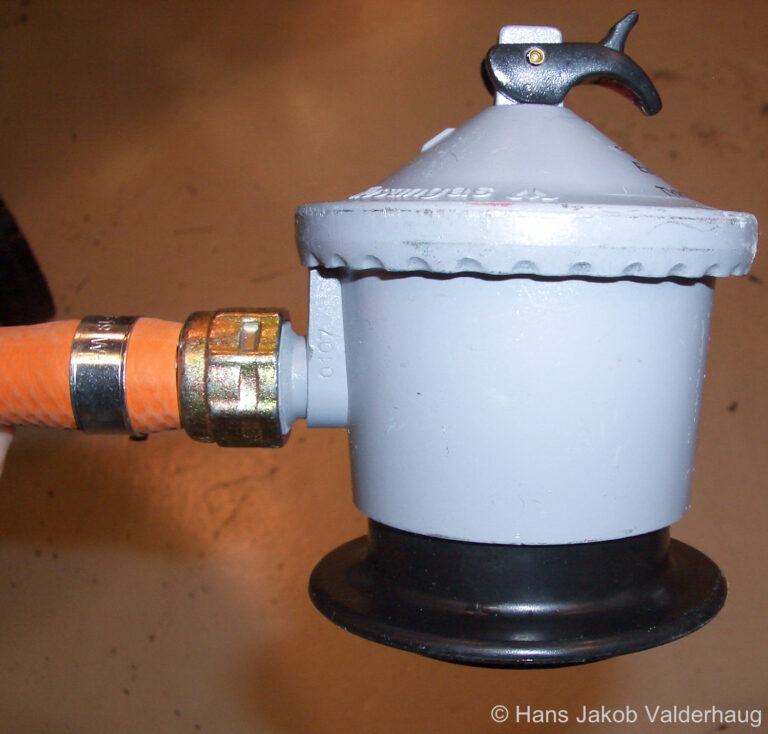 |
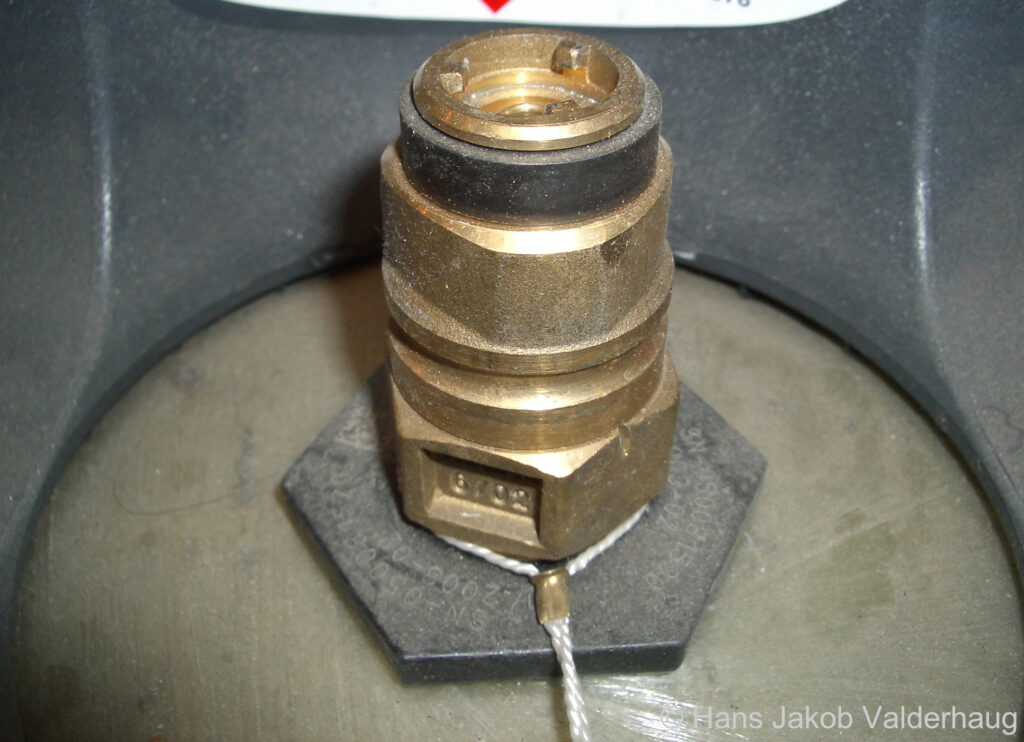
The most readily available gas cylinder is for the “H” (H as in household) regulator, often sold as the “Jumbo click-on” regulator. You will want to get the marine version with stainless steel components. |
 |
I-Type Cylinder
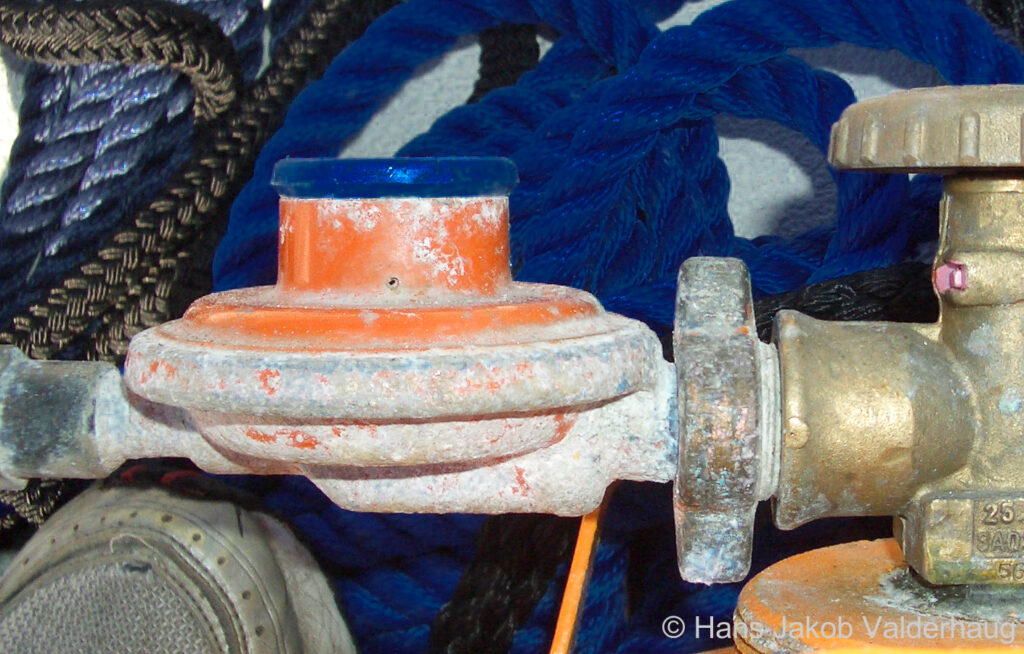 |
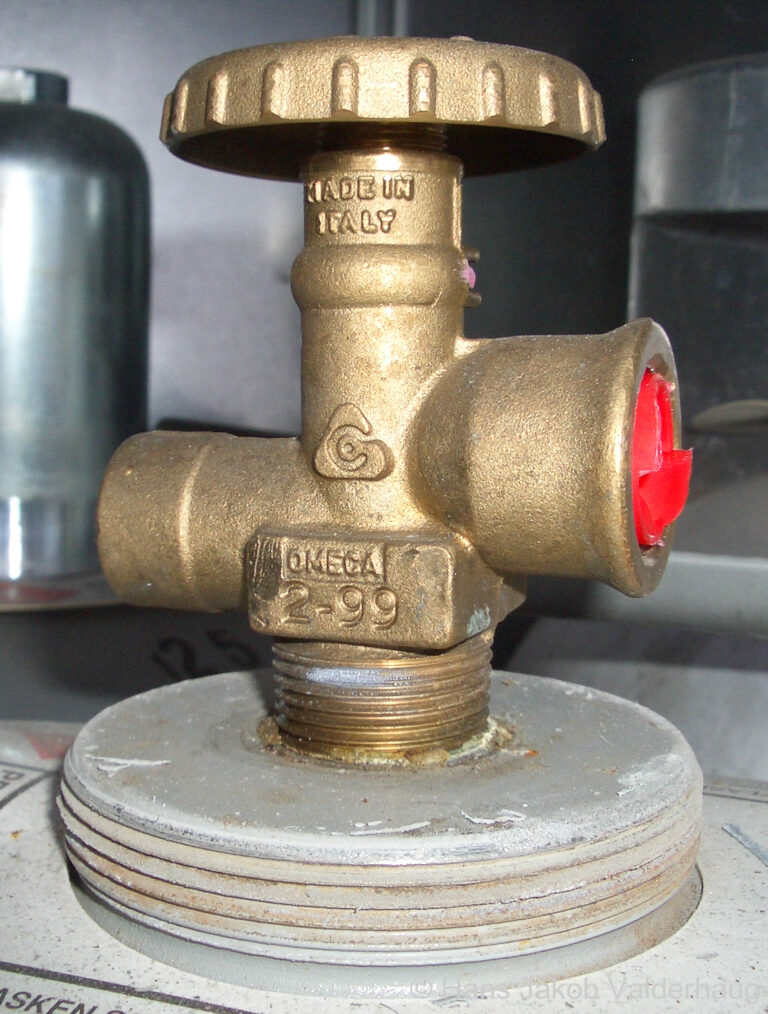
Cylinders with an “I” coupling (I as in “industrial”) or POL coupling are less common. This is a rugged regulator common in larger cylinders for commercial use. |
 |
Primus Cylinder
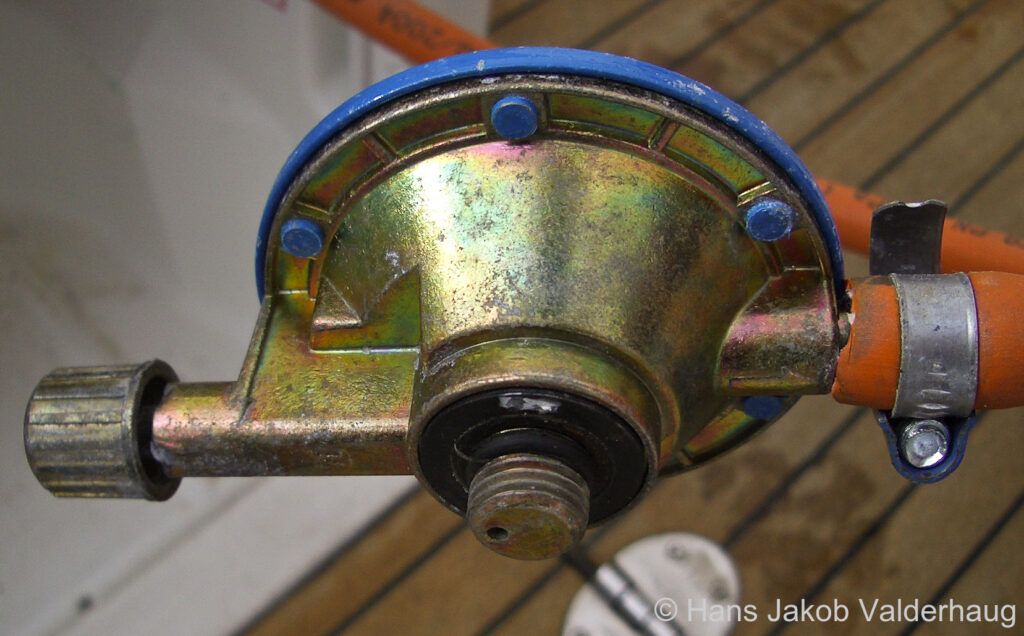 |
The Primus coupling is for the small 2 kg steel cylinders. The coupling is also known as “campingventil”. |
Before choosing a regulator, measure the space in your gas locker. Many modern European yachts can only fit the low, round 2 kg AGA cylinder, which requires a Primus regulator. The AGA 2 kg cylinder measures 28 cm high × 20.3 cm diameter.
Depending on your hose diameter, you may need an adaptor. It is advisable to install a low-pressure leak detector (pressure gauge) between the cylinder and regulator.
Primus regulators, H-regulators, adapters, and gas hoses are generally available from chandlers and hardware stores.
Adapters are available in Norway (e.g., Tess), in Sweden (e.g., Fogas), and in Germany (e.g., GOK Regler & Armaturen GmbH & Co. KG, Markbreit).
A hose clamp is not the recommended method for securing a gas connection, even if shown in some illustrations.